 Fate
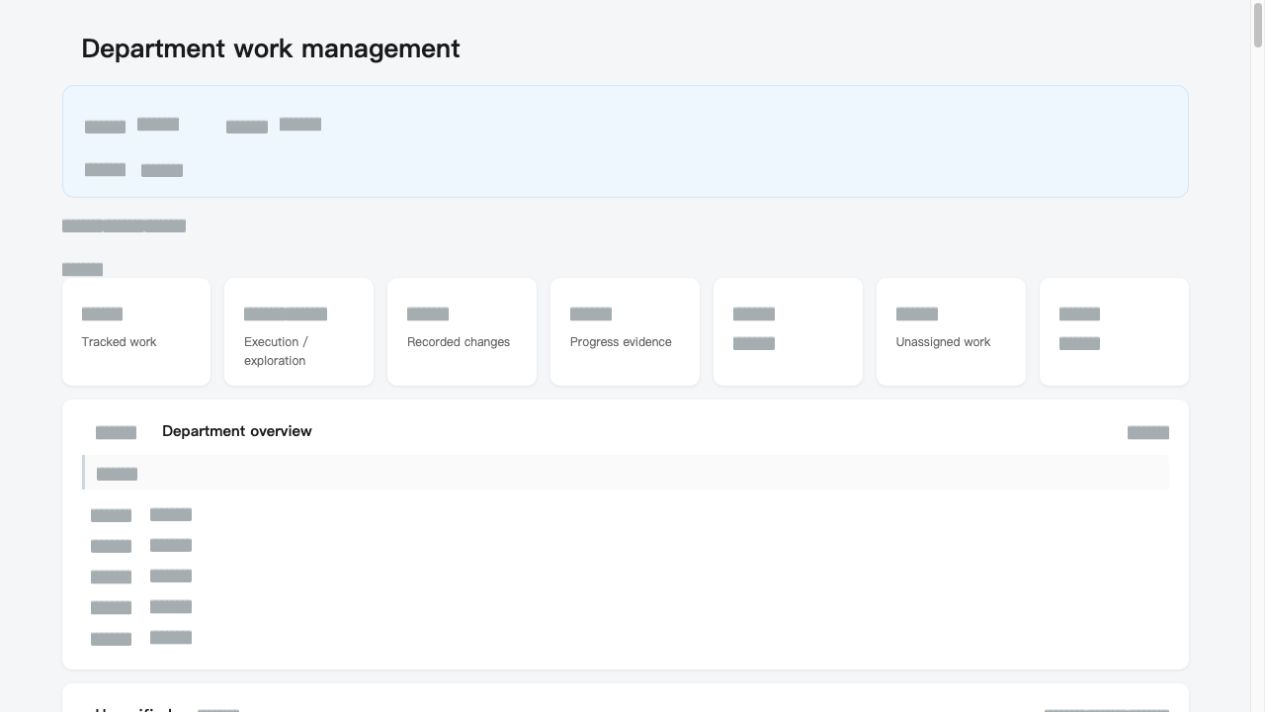
Start with a shared baseline
AI first assembled candidate work items from existing records. We reviewed them together, merging overlaps and removing unsuitable entries.
The baseline records the purpose, owner, priority, expected outcome, and relevant timing of each item.
People confirmed that starting point. Subsequent updates refer back to it, rather than creating another disconnected list.
Bring evidence into the work
Inputs include meeting records, work communications, project records, and completed work. Records are read directly or provided through exports.
AI matches new evidence to existing items, summarizes progress and blockers, and retains the supporting context.
People review new work and conflicting information before changing the shared list.
Make the same information useful to different readers
The work list preserves item-level detail. The overview highlights changes, questions, and decisions needing attention.
Department members check their work and dependencies. The manager reviews priorities, coordination, and issues requiring a decision.
The dashboard gives everyone a quick view; the work list provides the detail needed for follow-up.
Ask about a specific problem, then update the record
When an item needs clarification, AI prepares a focused question using the known facts and asks with the relevant colleagues.
Confirmed answers become evidence for the next update. Commitments and material changes remain subject to human decisions.
Routine checks stay quiet when nothing needs action. Questions and answers remain attached to the relevant work item.
My decisions
I confirmed the baseline, defined judgment and escalation rules, and review important decisions.
The dashboard is one view of the work. The shared record and human decisions keep it useful.